Joanna Ambroz
Leave the Hearts, What Do You Need Them For?
Exhibition Catalogue at Radisson RED Kraków
Opening: September 25, 2026, at 5:00 PM
For inquiries regarding the purchase of artworks, please contact:
ambrozjoanna@gmail.com
or Instagram
ambrozjoanna@gmail.com
or Instagram
Dr Ewelina Adamik: In Joanna Ambroz's latest exhibition, Leave Your Hearts — What Do You Need Them For?, Ambroz asks a fundamental question: what has happened to the love that so many people long for, the idea of which quietly accompanies us in our everyday lives? She also asks how love affects us when we lose ourselves in it, and when it disappoints us. Why do we believe that romantic feelings must be part of our lives if we want to find true happiness? Ambroz’s artistic gesture challenges the established ideas we have about love. In doing so, she reminds us that love is not an obligation.
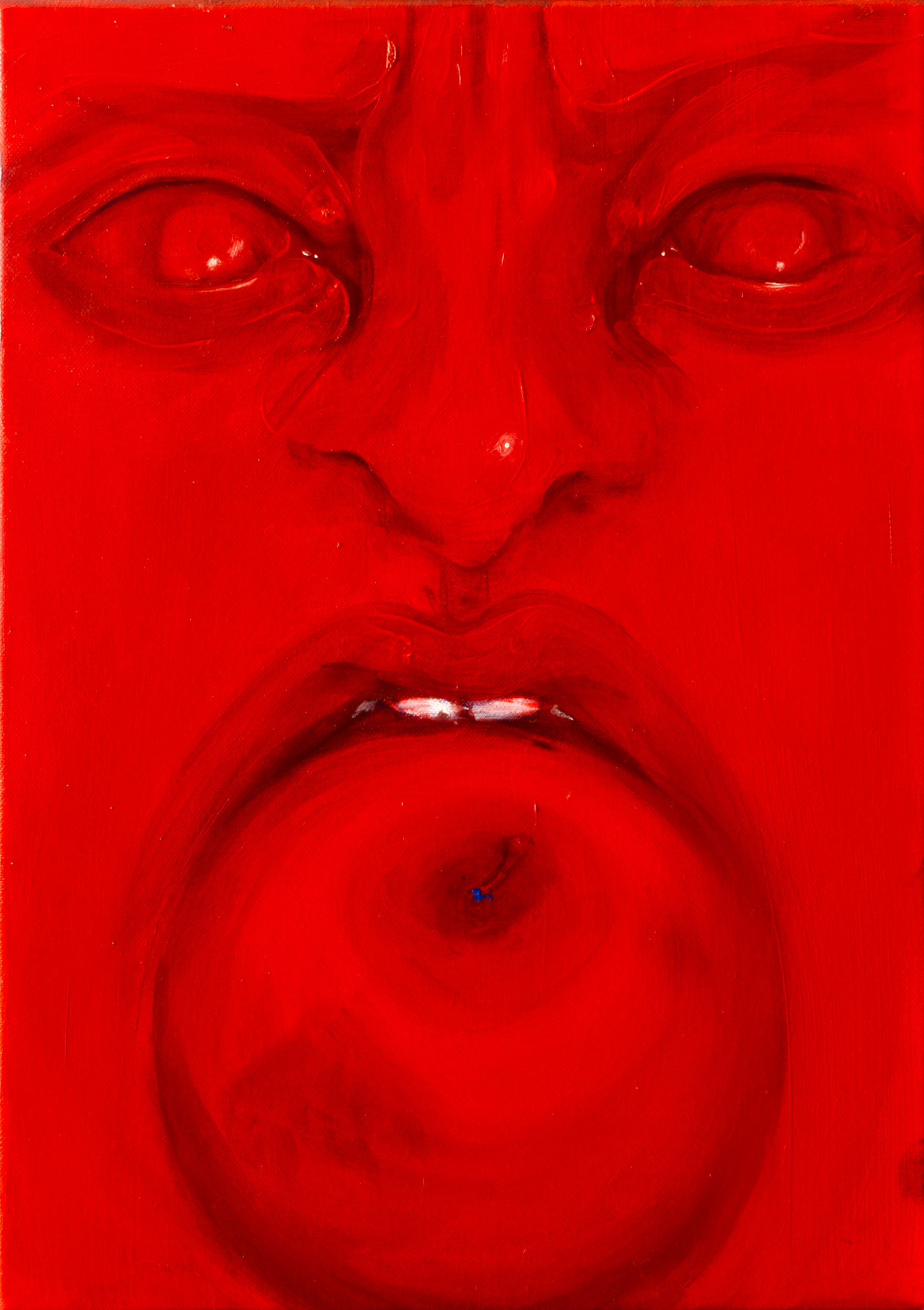
Everyone has it, give it to me!
33×46 cm, oil on canvas
Residency at the Rothko Museum, Latvia, 2026
1400 Euro
33×46 cm, oil on canvas
Residency at the Rothko Museum, Latvia, 2026
1400 Euro
Let us begin with the figure of the apple, which carries many meanings in our culture and appears in a wide range of contexts. In Christian tradition, it is associated with impurity, sin and temptation. In a sense, the apple is also responsible for the Trojan War, set in motion by the famous Judgement of Paris. The young man gave the fruit to Aphrodite, declaring her the most beautiful, and in return she promised him the love of Helen. In three famous lines, Sappho compared a woman to an apple reddening at the top of a tree, beyond the reach of those who came to pick it.
The fruit also had a particular role in culinary tradition. It was sometimes placed in the mouth of a roasted pig to preserve the shape of its snout. Warriors used the apple differently, shooting at it when it was placed on the head of an unfortunate person. In mythology, the arrow is once again connected with Eros, whom the poet quoted above described as “sweet-bitter.”
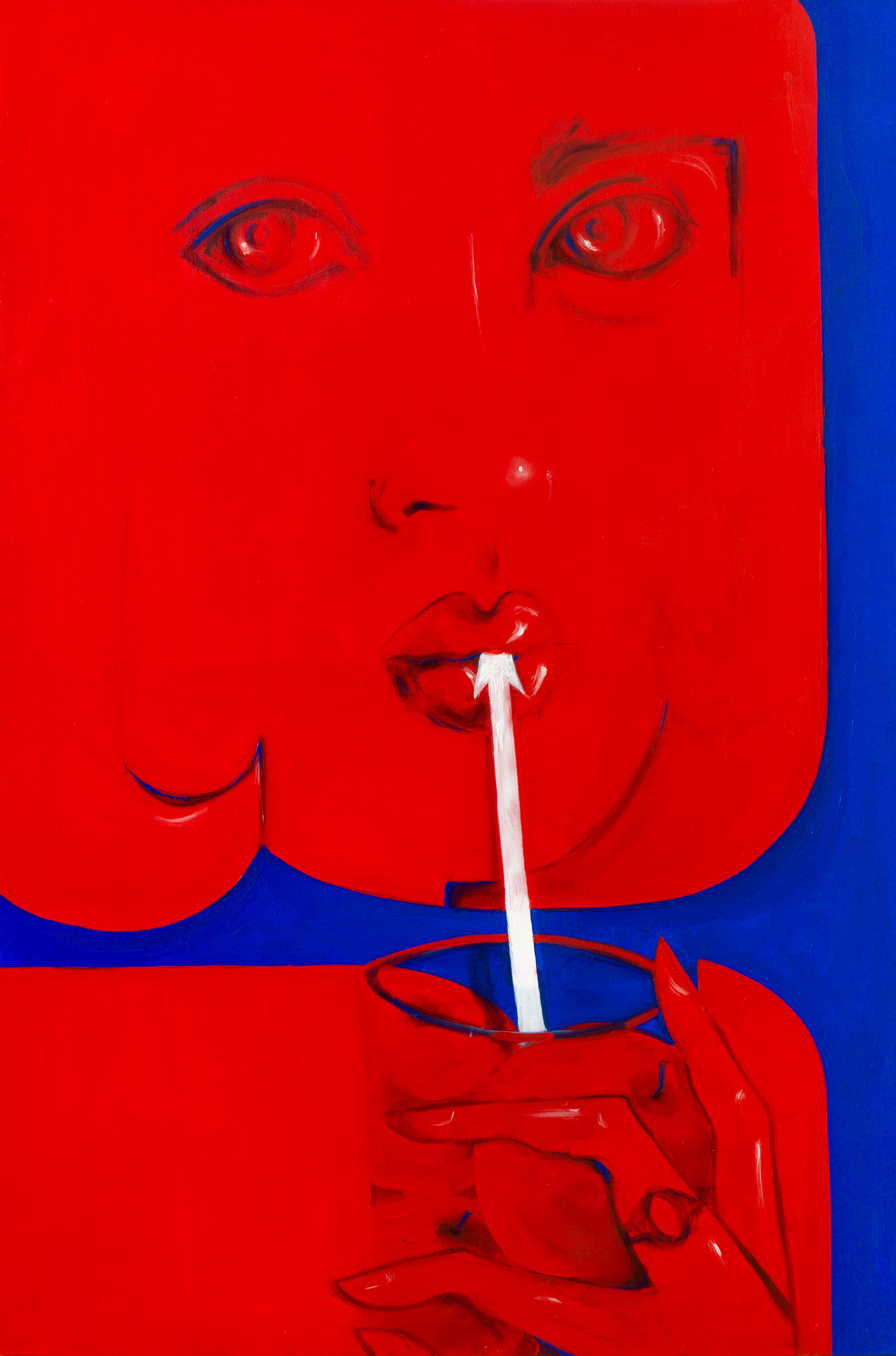
ive Your Hearts Away , What Do You Need Them For?
80×120 cm, oil on canvas
Warsaw, 2026
🔴
80×120 cm, oil on canvas
Warsaw, 2026
🔴
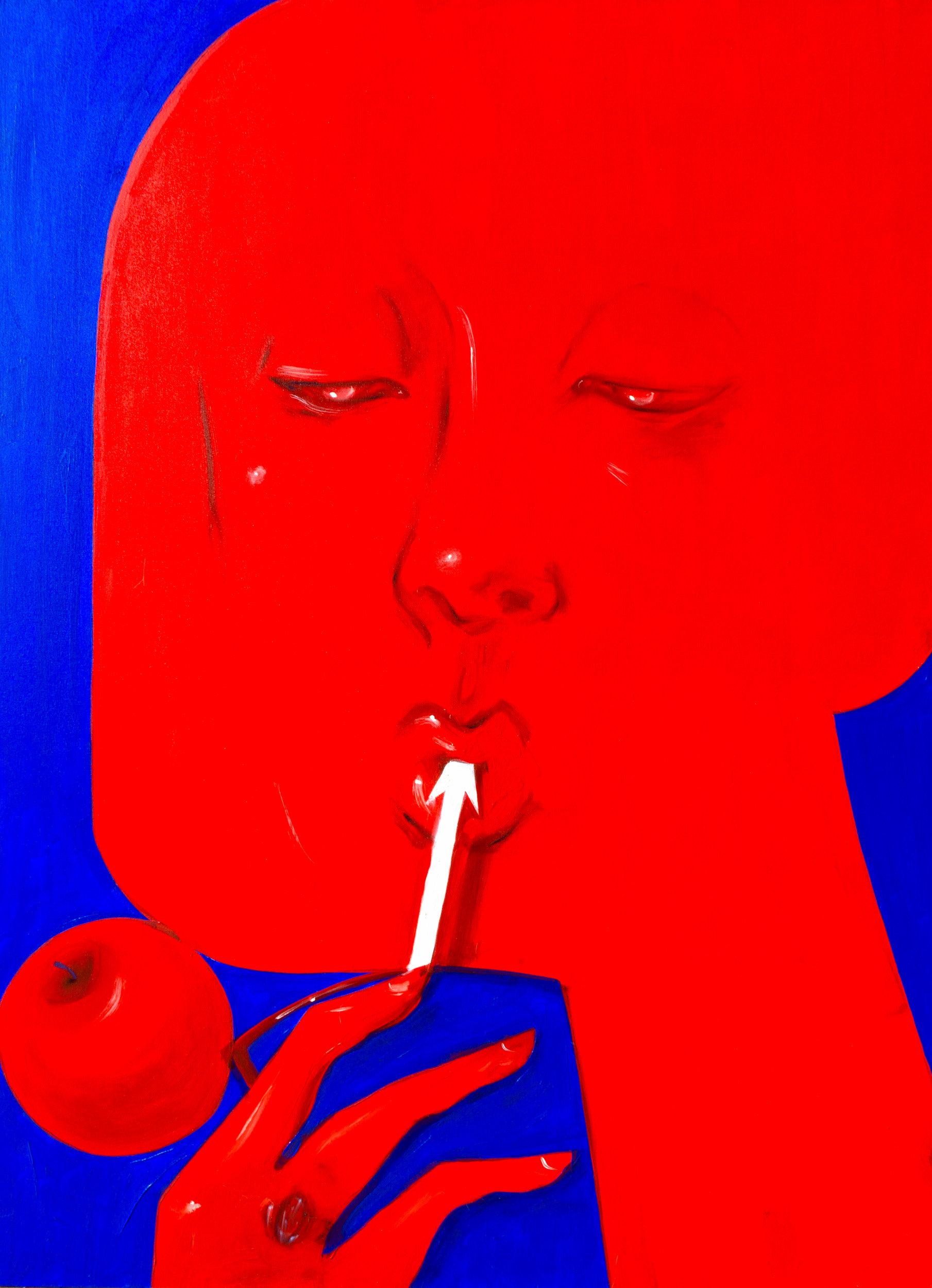
Slowly sipping their words
73×100 cm, oil on canvas
Warsaw, 2026
3700 Euro
73×100 cm, oil on canvas
Warsaw, 2026
3700 Euro
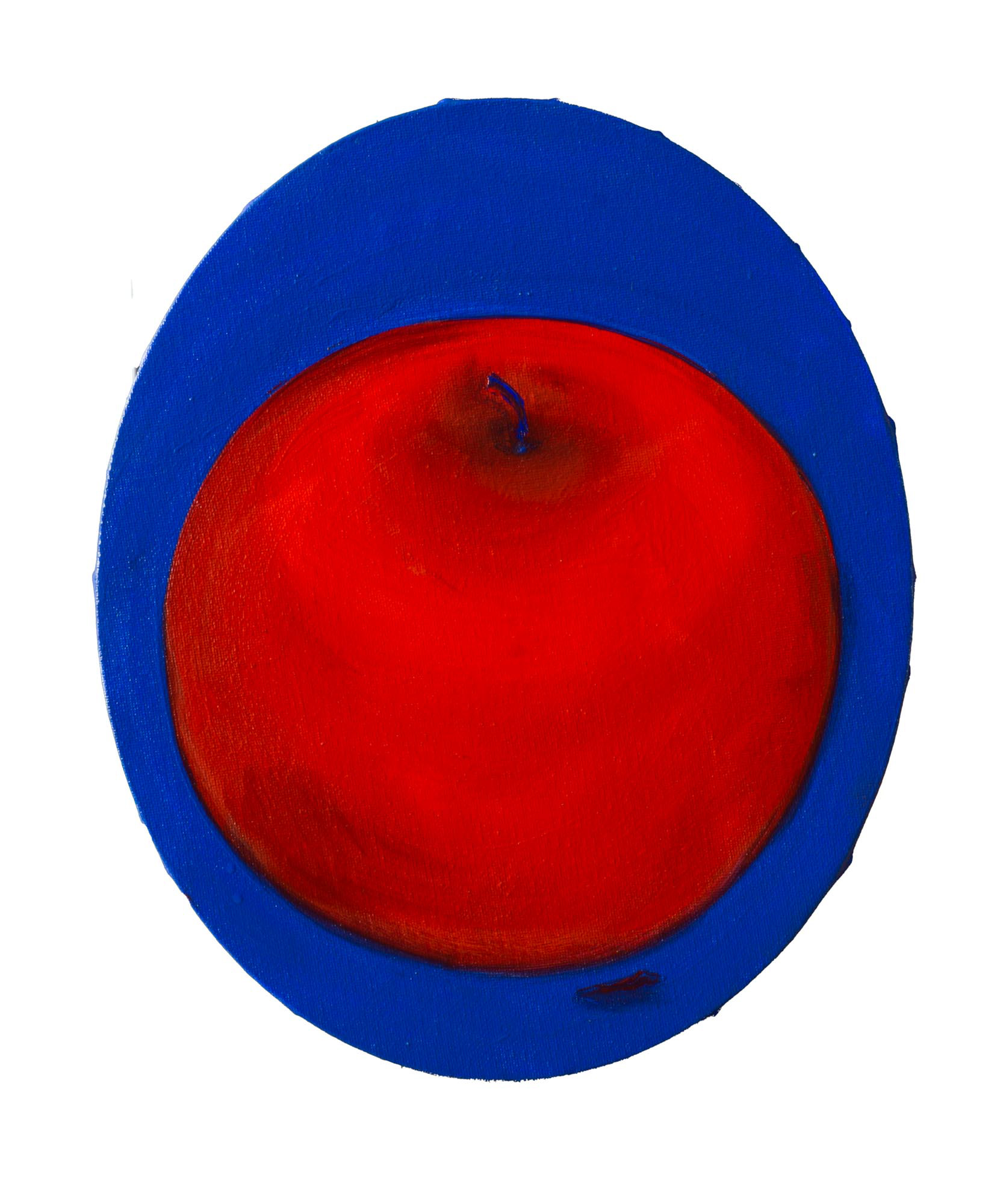
The Gift
24,8×29,7 cm, oil on canvas
Residency at the Rothko Museum, Latvia, 2026
700 Euro
24,8×29,7 cm, oil on canvas
Residency at the Rothko Museum, Latvia, 2026
700 Euro
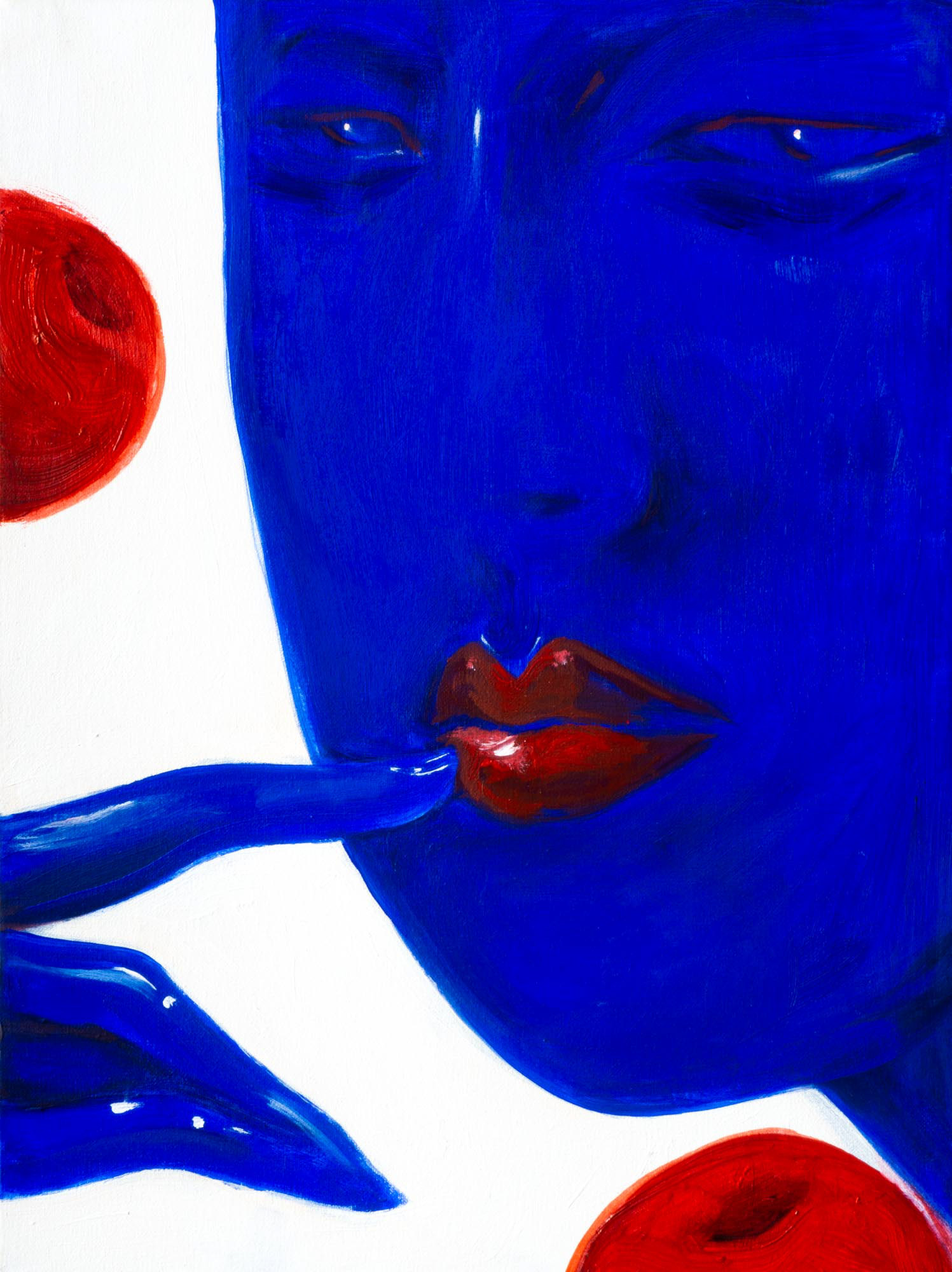
Say It in Two Courses
30×40 cm, oil on canvas
Warsaw, 2026
🔴
30×40 cm, oil on canvas
Warsaw, 2026
🔴
These contexts seem to echo Ambroz’s artistic intentions. Yet the woman depicted by the painter, although as captivating as Sappho’s apple, may in fact be closer to Paris, who makes a choice while holding the fruit in his hand.
In this artistic vision, the apple takes on different forms. Although it symbolises love, and therefore the social norms and expectations surrounding it, it does not support the idea that everyone must be in a romantic relationship. The artist consciously draws on the language of psychoanalysis and fourth-wave feminism, which is based on cooperation between women and men.
Today, when women can express their agency much more fully, stories about a prince charming who will rescue a helpless girl still circulate. It is therefore hardly surprising that women create art about love, even when they have not experienced it themselves. Sooner or later, an independent woman encounters pressure to start a family. Romantic relationships, and, within the conventional – though increasingly less binding – social order, the promise of a shared life and children, are presented as their natural outcome.
In this artistic vision, the apple takes on different forms. Although it symbolises love, and therefore the social norms and expectations surrounding it, it does not support the idea that everyone must be in a romantic relationship. The artist consciously draws on the language of psychoanalysis and fourth-wave feminism, which is based on cooperation between women and men.
Today, when women can express their agency much more fully, stories about a prince charming who will rescue a helpless girl still circulate. It is therefore hardly surprising that women create art about love, even when they have not experienced it themselves. Sooner or later, an independent woman encounters pressure to start a family. Romantic relationships, and, within the conventional – though increasingly less binding – social order, the promise of a shared life and children, are presented as their natural outcome.
Norms imposed on women, placed in their mouths like a piece of fruit meant to silence them, make it difficult for them to feel free of guilt. In this context, the apple represents a form of love that a woman is taught to impose upon herself. Love becomes a planet around which she is expected to orbit.
Ambroz breaks this pattern of thinking. In contrast to the myth of two halves searching for one another, she emphasises that independence does not mean incompleteness.
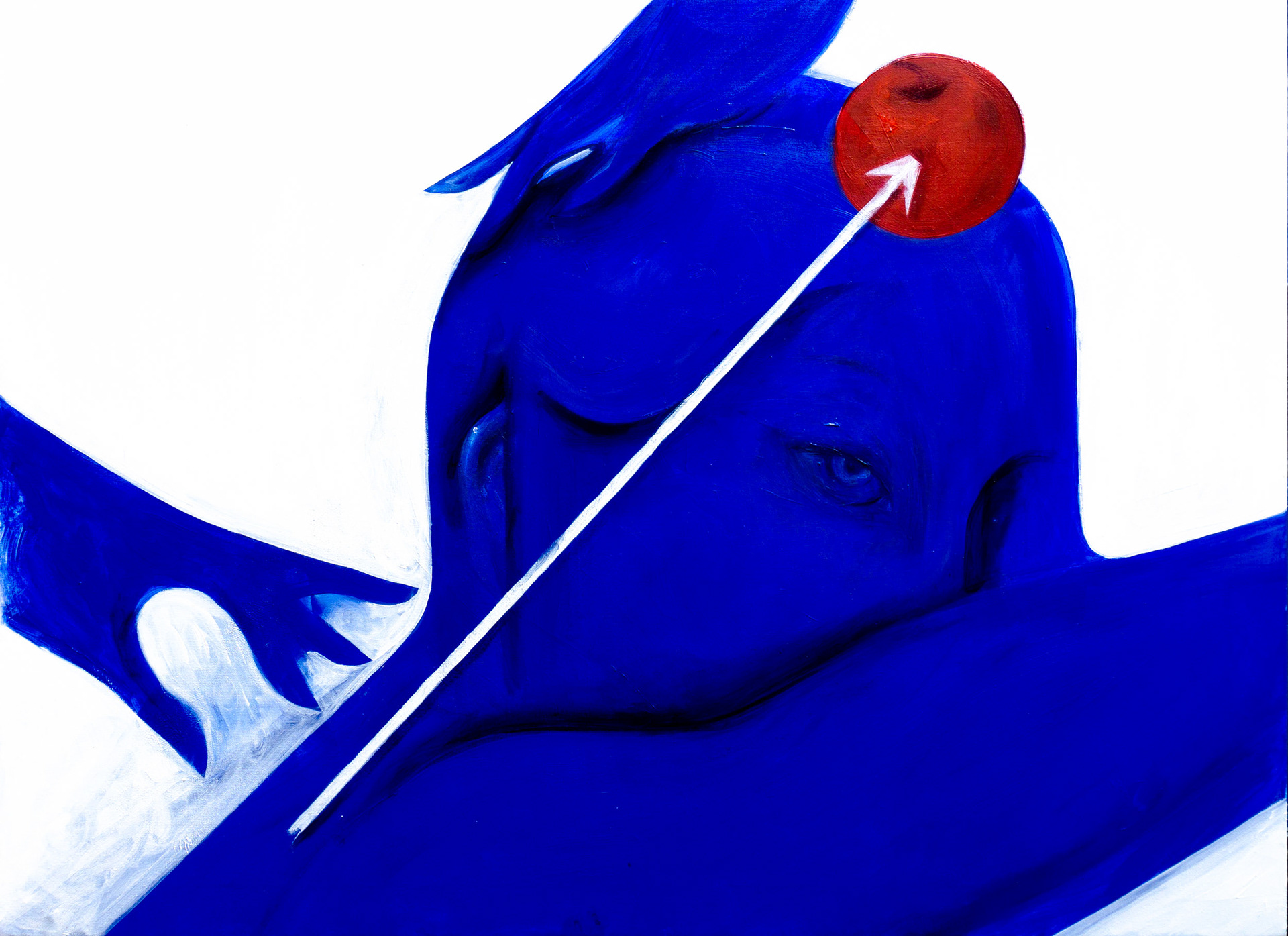
I Planted a Beautiful Garden Around Her
73×100 cm, oil on canvas
Warsaw, 2026
3700 Euro
73×100 cm, oil on canvas
Warsaw, 2026
3700 Euro
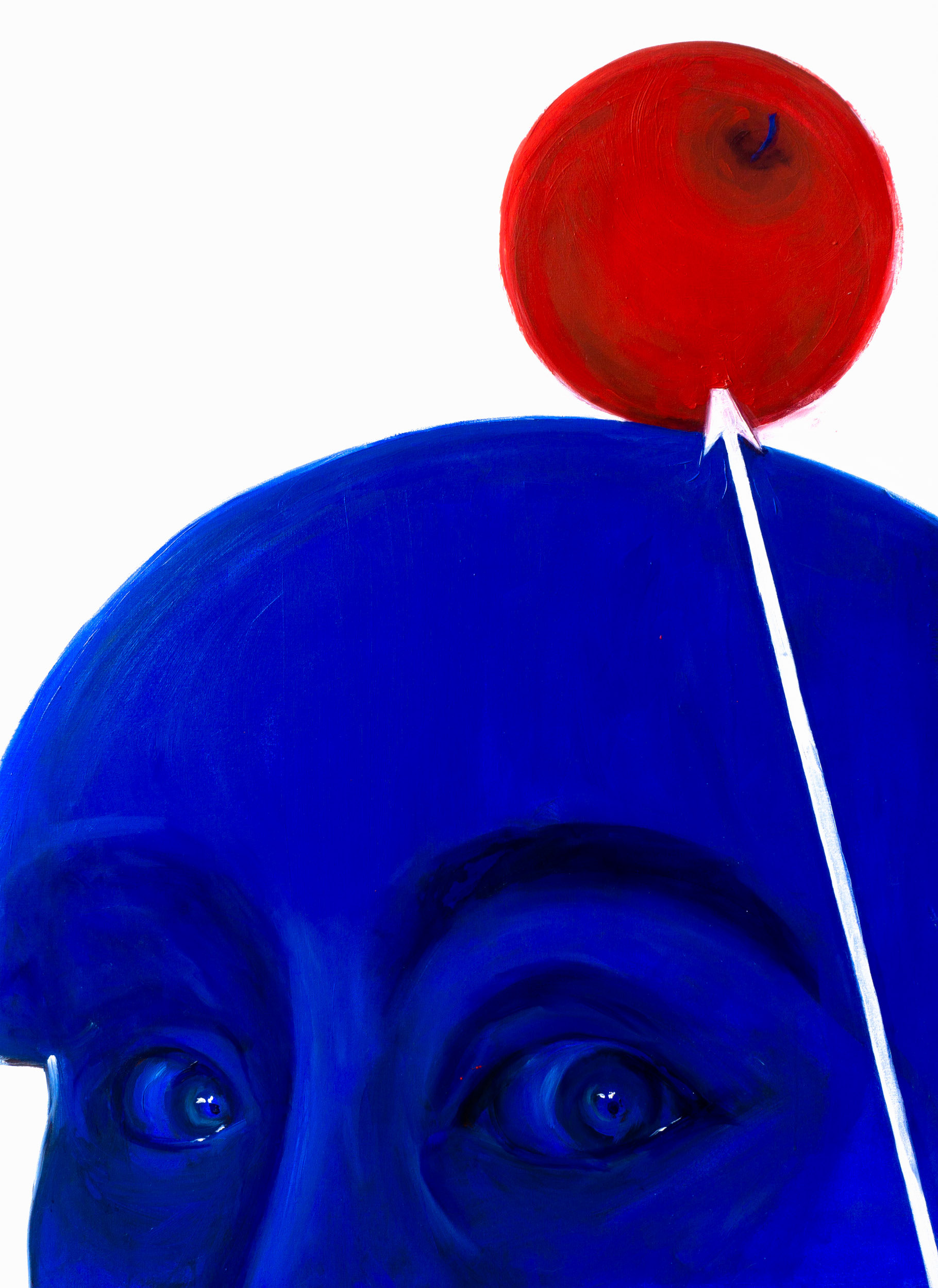
The Guard Fell Asleep on Duty
73×100 cm, oil on canvas
Warsaw, 2026
3700 Euro
73×100 cm, oil on canvas
Warsaw, 2026
3700 Euro
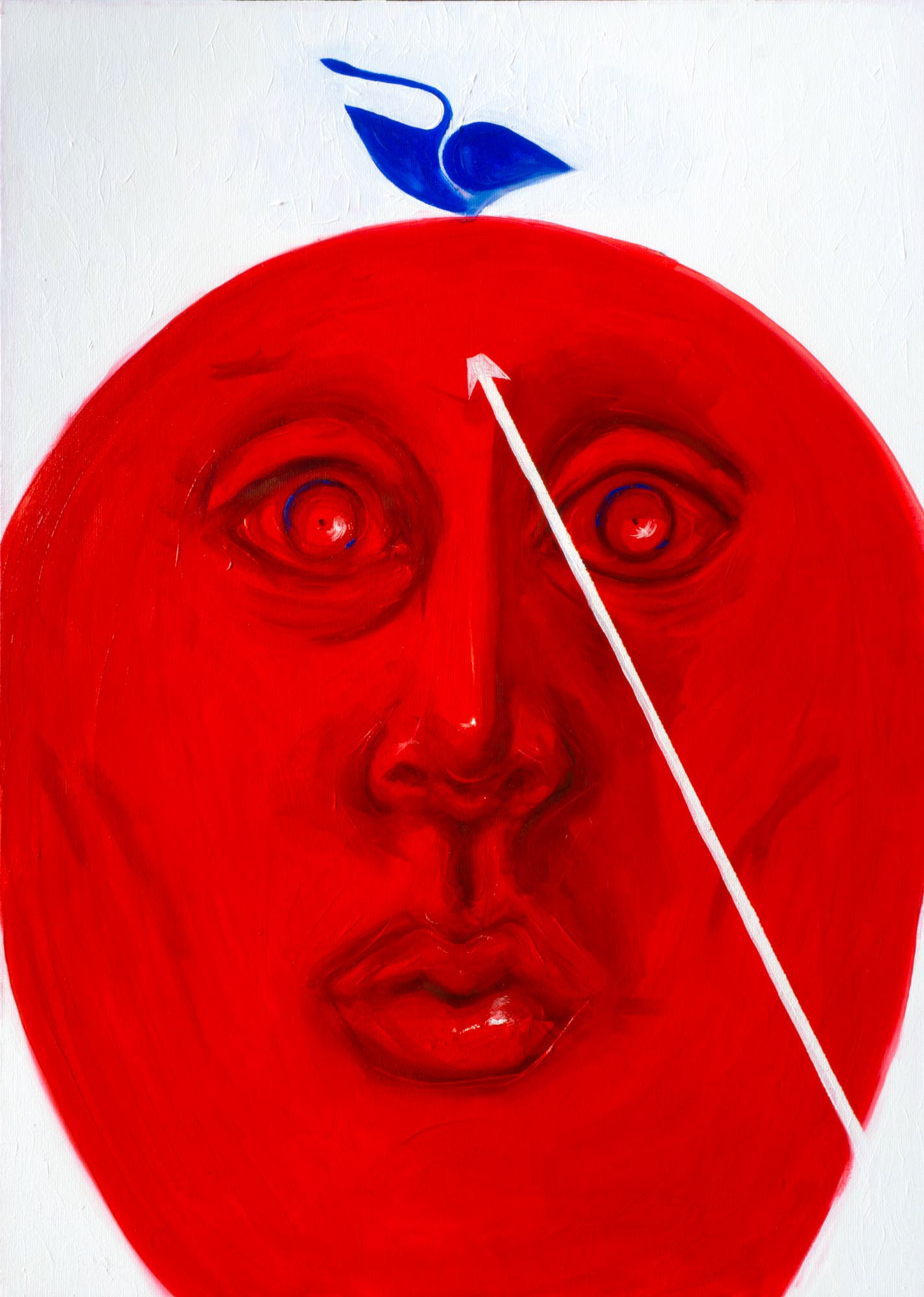
Who Are You? Let Me Pour Us Some Apple Juice.
50×70 cm, oil on canvas
Warsaw, 2026
2600 Euro
50×70 cm, oil on canvas
Warsaw, 2026
2600 Euro
Ambroz’s protagonist is sometimes showered with love (Good Manners Do Not Allow Refusal), and perhaps, in some sense, with the idea of love itself. She senses the threat that love might be violated (I Planted a Beautiful Garden Around Her). At other times, she wonders how she could have been struck by an arrow, and how a stranger came to touch her heart (I Will Pour Us Some Apple Juice). In another scene, with a girlish charm, she drinks apple juice and reflects on the words flowing towards her (Slowly Sipping Their Words).
The painter uses two colours to construct her narrative. Blue represents the space of the subconscious, while red symbolises the ego, temperament and conflict. The tensions between colours and forms convey the complex emotions that accompany stories of love and its absence. At the same time, Ambroz leaves space for individual freedom: the freedom to live in a way that feels right for oneself.
The painter uses two colours to construct her narrative. Blue represents the space of the subconscious, while red symbolises the ego, temperament and conflict. The tensions between colours and forms convey the complex emotions that accompany stories of love and its absence. At the same time, Ambroz leaves space for individual freedom: the freedom to live in a way that feels right for oneself.
Autobiographical shadow paintings intertwine with an idealised longing for love. The artist borrows the concept of the shadow from the vocabulary of Carl Gustav Jung. It refers to the hidden part of our personality, containing traits, desires and emotions that we repress and keep outside conscious awareness. It includes everything we dislike about ourselves, consider immoral or shameful, or feel does not fit our ideal image of who we are — our persona.
The shadows, the apple, and the red painting Everyone Has It, Give It to Me! were created by the artist during her residency at the Rothko Museum.
The shadows, the apple, and the red painting Everyone Has It, Give It to Me! were created by the artist during her residency at the Rothko Museum.
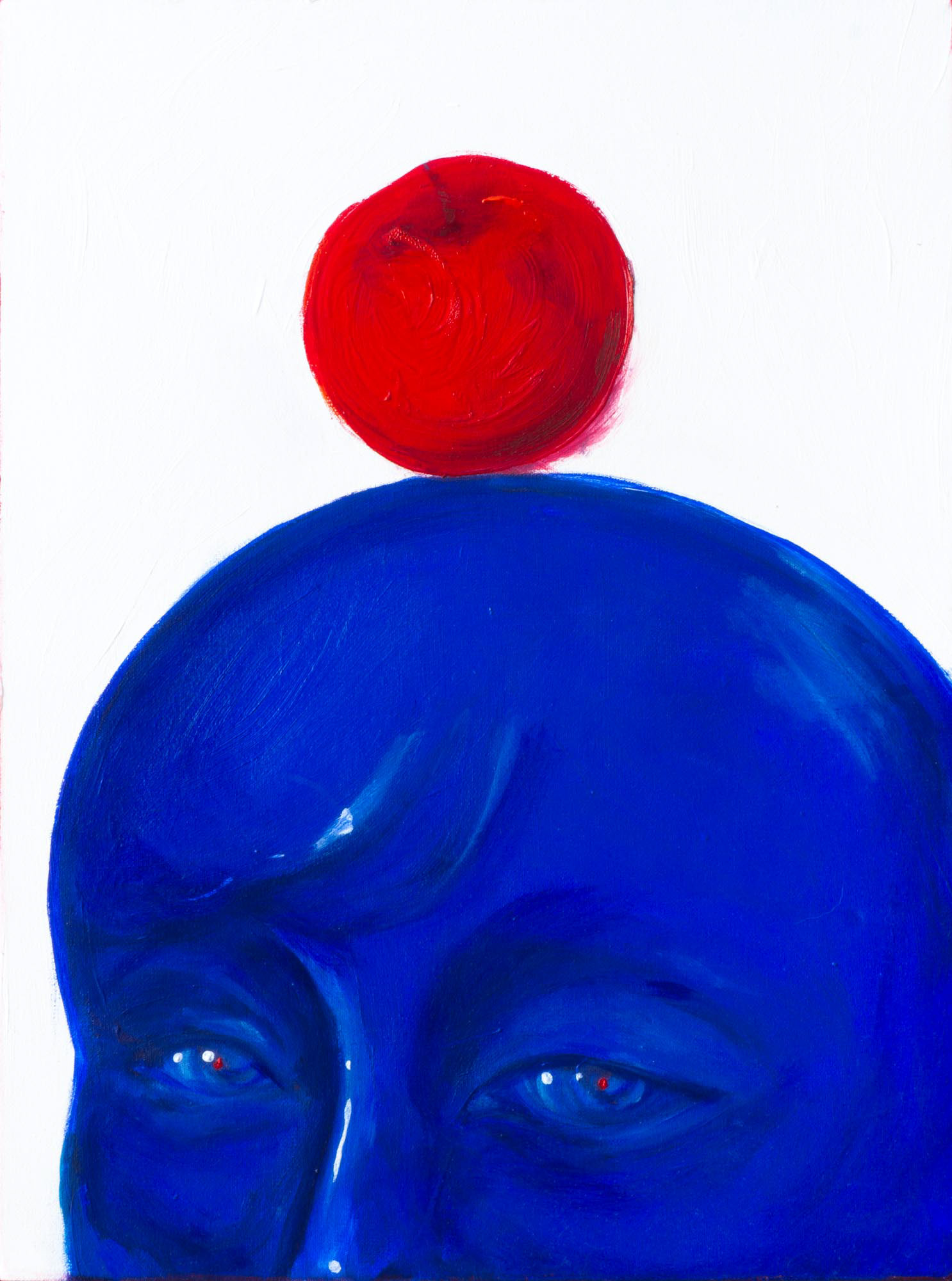
Look, So Many Treasures So Close
30×40 cm, oil on canvas
Warsaw, 2026
1200 Euro
30×40 cm, oil on canvas
Warsaw, 2026
1200 Euro
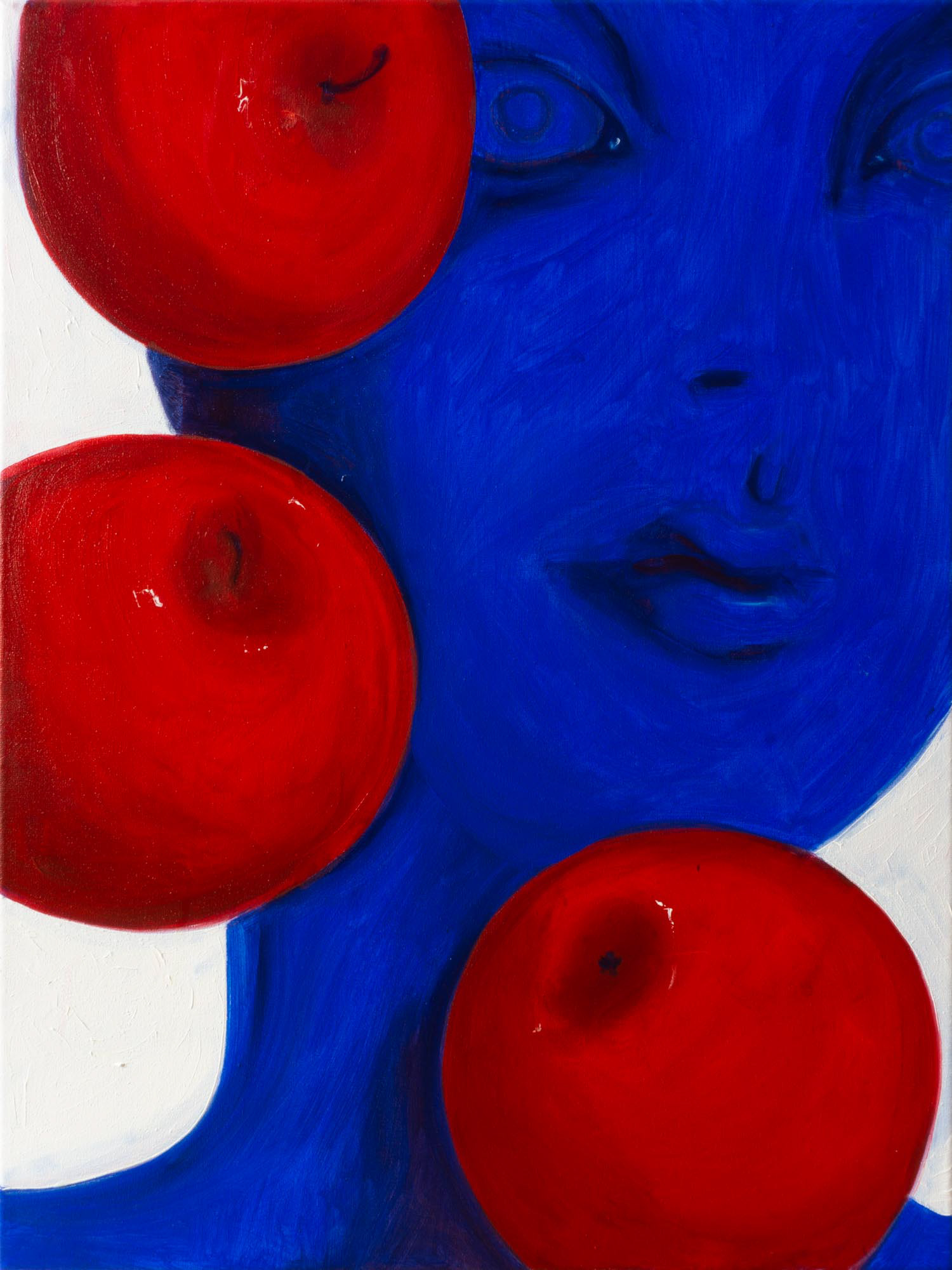
Good Manners Allow No Refusal
46×61 cm, oil on canvas
Warsaw, 2026
2400 Euro
46×61 cm, oil on canvas
Warsaw, 2026
2400 Euro
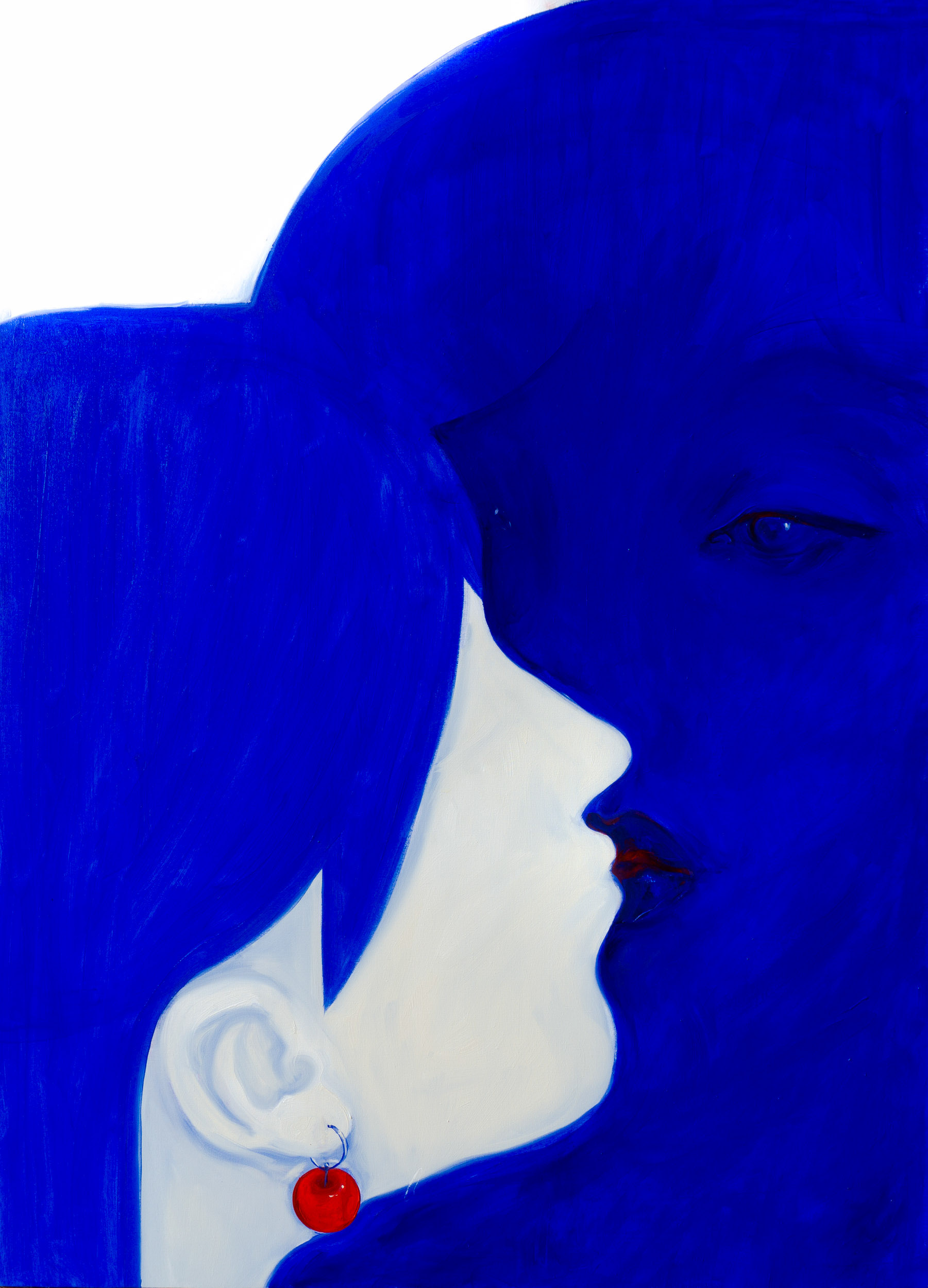
Gentleness Is a Gift, Not a Weakness
80×110 cm, oil on canvas
Warsaw, 2026
4000 Euro
80×110 cm, oil on canvas
Warsaw, 2026
4000 Euro
Joanna Ambroz is a painter. She considers whether what has been promised becomes a desire.
Her works are held in the collections of the Rothko Museum, the National Museum in Warsaw, the Poster Museum in Wilanów, the National Museum in Poznań, and the National Museum in Lublin.
She completed her master’s degree with the Rector’s Distinction and her bachelor’s degree with the Rector’s Medal, both at the Academy of Fine Arts in Katowice. She also completed her PhD at the Academy of Fine Arts in Katowice with the thesis Come, I’ll Show You My Knives. The work received a distinction in the Most Beautiful Polish Books of the Year 2023 competition, was nominated for Project of the Year, became part of the collection of the National Museum in Poznań, and was presented at the Royal Academy of Fine Arts in Antwerp, Belgium.
Her works are held in the collections of the Rothko Museum, the National Museum in Warsaw, the Poster Museum in Wilanów, the National Museum in Poznań, and the National Museum in Lublin.
She completed her master’s degree with the Rector’s Distinction and her bachelor’s degree with the Rector’s Medal, both at the Academy of Fine Arts in Katowice. She also completed her PhD at the Academy of Fine Arts in Katowice with the thesis Come, I’ll Show You My Knives. The work received a distinction in the Most Beautiful Polish Books of the Year 2023 competition, was nominated for Project of the Year, became part of the collection of the National Museum in Poznań, and was presented at the Royal Academy of Fine Arts in Antwerp, Belgium.
k has been exhibited at the École des Beaux-Arts in Paris as part of the prestigious Prix Bob Calle competition. She is the winner of the Grand Prix at the 29th Polish Poster Biennale. She has also participated in, among others, VOLTA Art Fair New York, represented by The CAMP Gallery Miami, and Deaejon ArtShow in South Korea.
www.joannaambroz.pl
Instagram: joannaambroz
www.joannaambroz.pl
Instagram: joannaambroz
Ewelina Adamik holds a PhD in the humanities and is a literary scholar, literary critic and journalist. She is affiliated with Vogue Polska, Kultura Liberalna and the University of Wrocław. She also publishes in Dwutygodnik, Odra and Nowe Książki.
Instagram: ewelinaadamik
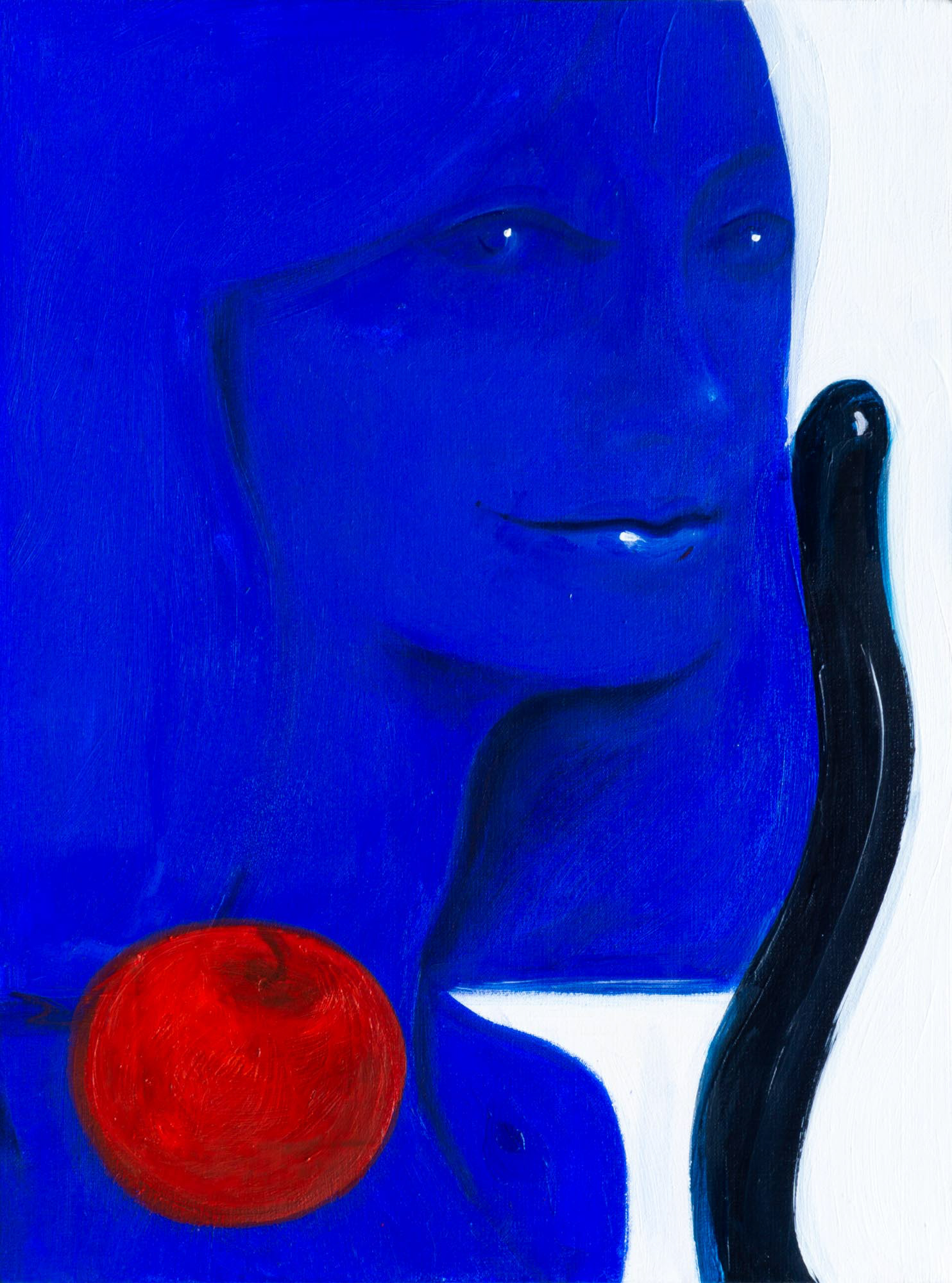
Back to Old Interests
30×40 cm, oil on canvas
Warsaw, 2026
1200 Euro
30×40 cm, oil on canvas
Warsaw, 2026
1200 Euro
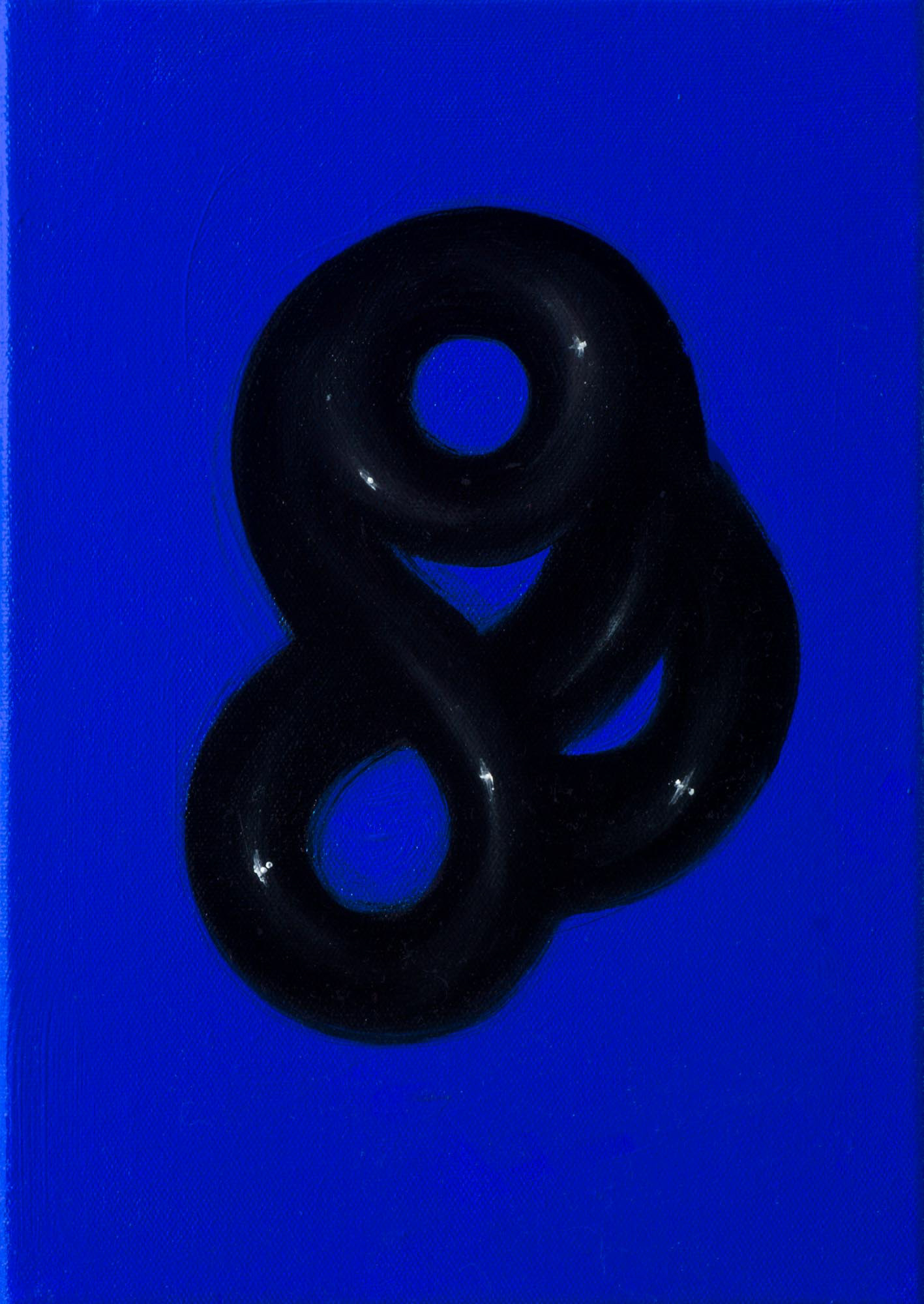
The Jungian Shadow
21×30 cm, oil on canvas
Residency at the Rothko Museum, Latvia, 2026
700 Euro
21×30 cm, oil on canvas
Residency at the Rothko Museum, Latvia, 2026
700 Euro
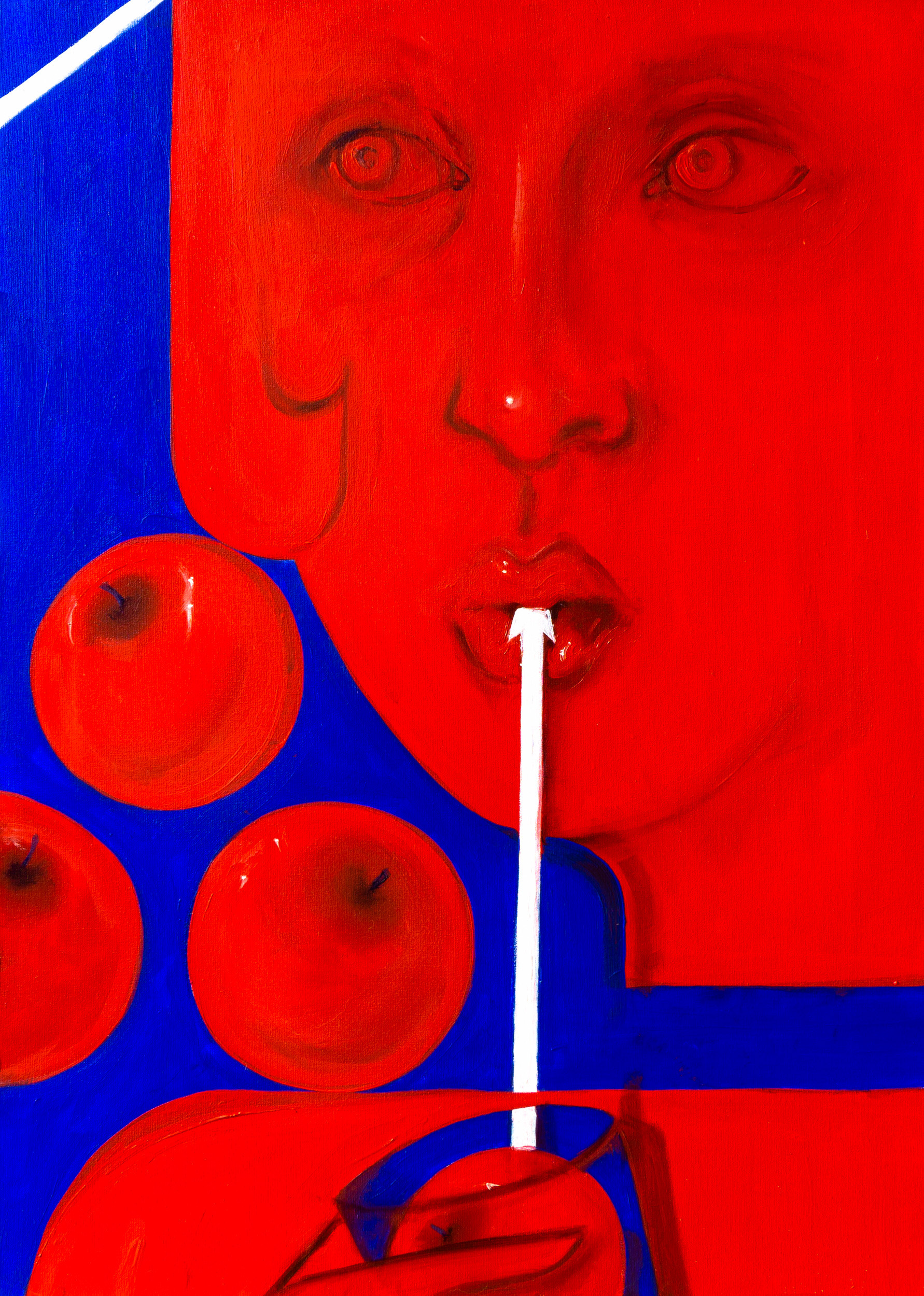
Something Flickered Past
50×70 cm, oil on canvas
Warsaw, 2026
2600 Euro
50×70 cm, oil on canvas
Warsaw, 2026
2600 Euro

The Jungian Shadow
33×46 cm, oil on canvas
Residency at the Rothko Museum, Latvia, 2026
810 Euro
33×46 cm, oil on canvas
Residency at the Rothko Museum, Latvia, 2026
810 Euro
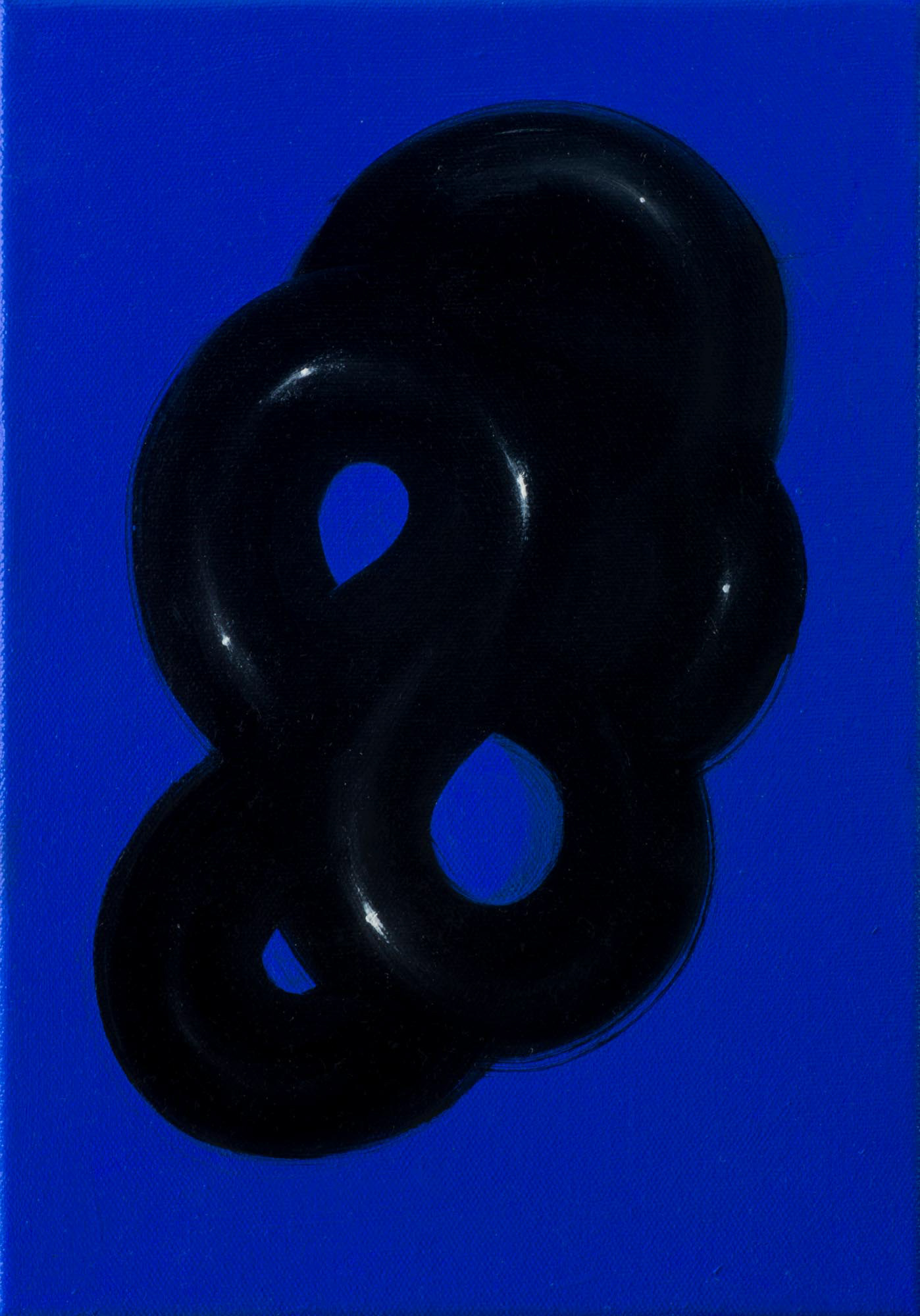
The Jungian Shadow
21×30 cm, oil on canvas
Residency at the Rothko Museum, Latvia, 2026
700 Euro
21×30 cm, oil on canvas
Residency at the Rothko Museum, Latvia, 2026
700 Euro
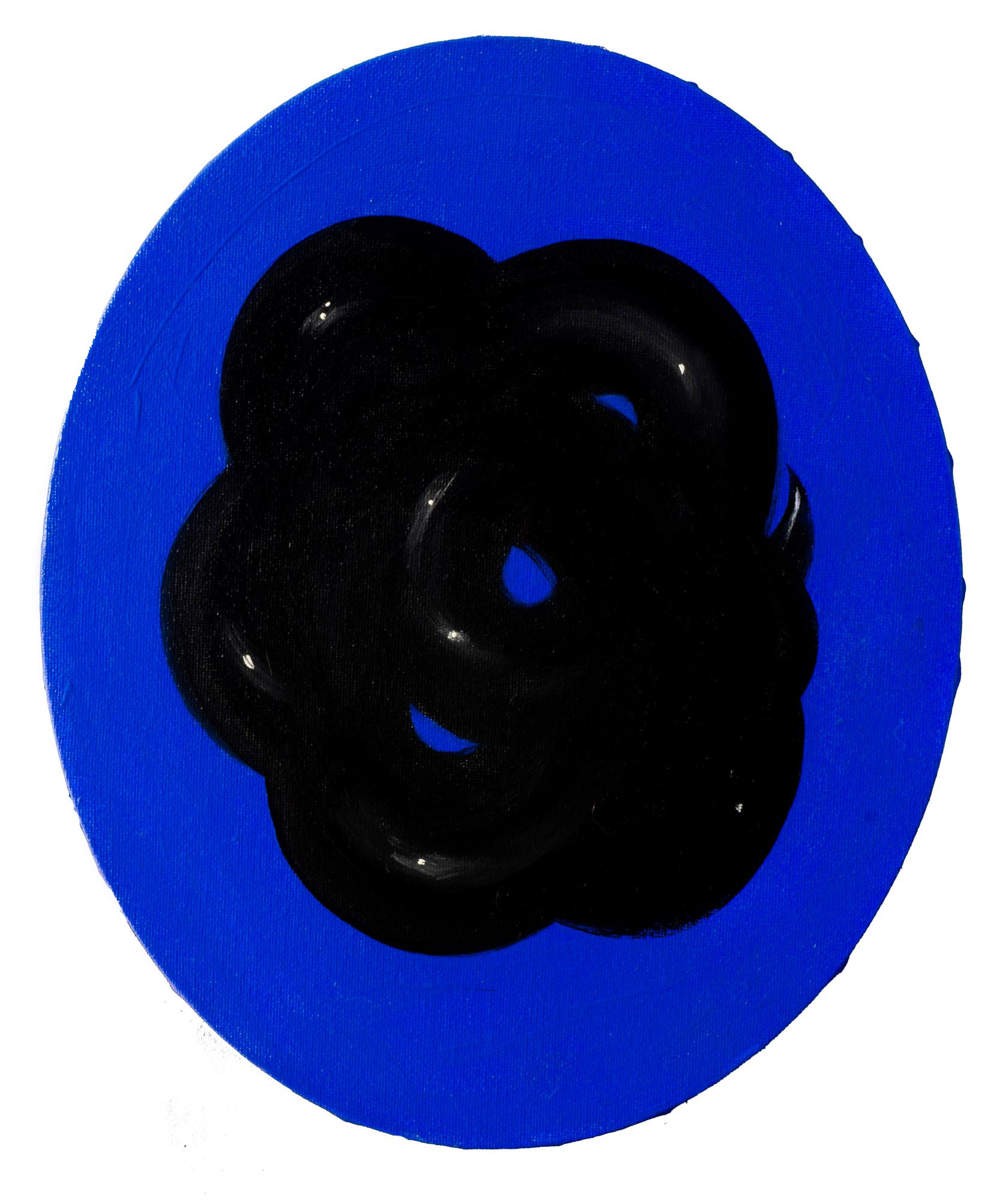
The Jungian Shadow
24,8×29,7 cm, oil on canvas
Residency at the Rothko Museum, Latvia, 2026
700 Euro
24,8×29,7 cm, oil on canvas
Residency at the Rothko Museum, Latvia, 2026
700 Euro